Fix, Learn, Belong: The Saturday Morning Revolution in Your Local Hall
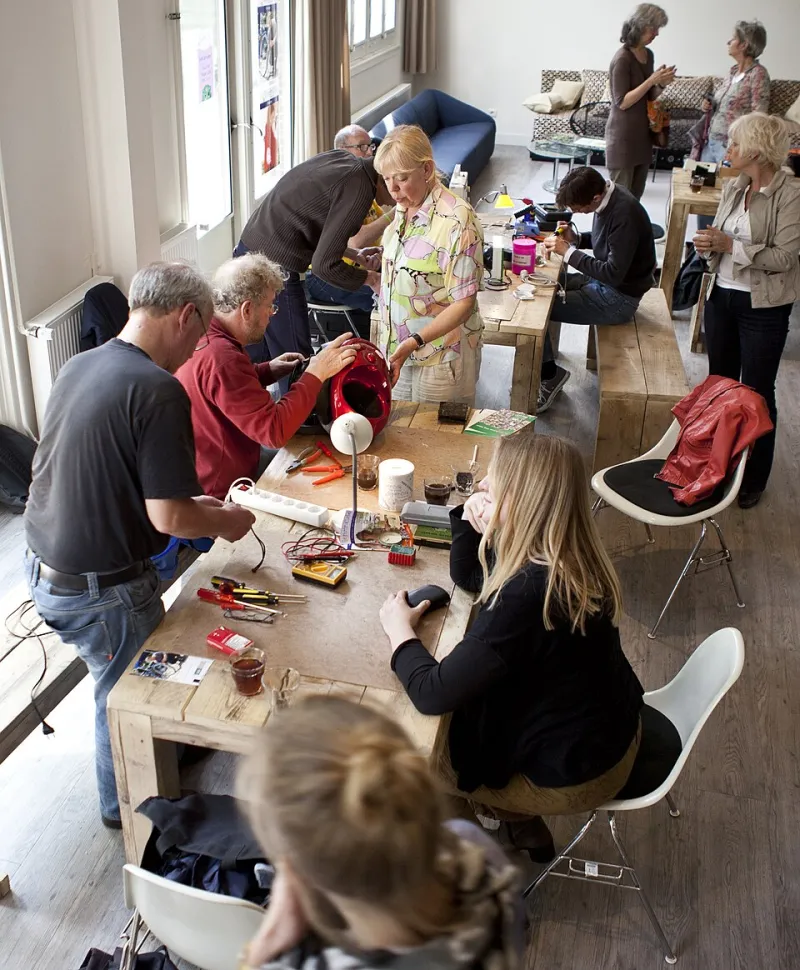
Photo: Ilvy Njiokiktjien, CC BY-SA 3.0, via Wikimedia Commons
On the first Saturday of the month, the church hall on the high street smells of coffee, solder and old wood. A queue forms by the door: a woman with a broken lamp, a teenager with a dead games controller, a man carrying a bicycle wheel, and a child holding a teddy bear that has lost an ear. This is not a jumble sale. It is a repair café — part social club, part classroom, part quiet rebellion against the bin.
Across the UK, repair cafés and skill-sharing sessions have become some of the most welcoming grassroots events on the calendar. They are run by volunteers, funded by donations, and powered by the belief that a toaster with a loose wire deserves a second chance. In 2026, with the cost of living still biting and right-to-repair rules in the spotlight, they matter more than ever. They also happen to be brilliant fun.
What happens at a repair café
Most sessions run monthly or fortnightly, often on a Saturday morning in a library, community centre, church hall or maker space. You turn up with your broken item and a willingness to wait. A greeter logs you in, asks what's wrong, and gives you a ticket. A volunteer repairer takes a look. If they can fix it, they will — often with you watching, asking questions and holding the torch. If they can't, they'll explain why and point you towards a professional repairer or a responsible way to recycle.
Electrical items are usually PAT tested after repair, and some things — microwaves, sealed units, anything with a dodgy battery — may be out of scope for safety reasons. The rule is simple: we try, we don't guarantee, and we never charge a fixed fee. A donation is welcome, but nobody is turned away for being skint.
While you wait, there's tea. There's cake. There's a table of people darning socks, sharpening tools, adjusting bike brakes or learning how to solder. The atmosphere is less 'workshop' and more 'village hall with a multimeter'.
The volunteers — and the fixes you wouldn't believe
Repair café volunteers are a mixed bunch: retired engineers, seamstresses, bike mechanics, librarians, electricians, teenagers who know their way around a soldering iron, and people who just like taking things apart. Some have decades of experience. Others are learning as they go. All of them have a story about the fix that got away.
You'll hear about the 1970s sewing machine brought back to life with a new belt, the wooden chair saved with a dowel and wood glue, the headphones fixed with a bit of wire and patience, the child's toy repaired with a guitar string, the bike that shifted gears for the first time in a decade. Not every fix is glamorous. Some are just a good clean and a tighten. But the look on someone's face when the thing works again is the same.
There is also a quiet satisfaction in watching a teenager learn to use a screwdriver from a pensioner who has been fixing things since before they were born. The skills are practical, but the exchange is social. That is the secret sauce.
More than a screwdriver
Repair cafés are skill-shares in disguise. Alongside the repair tables, you might find a darning circle, a basic bike maintenance demo, a soldering lesson, a furniture upcycling corner or a knife-sharpening station. Some sessions run short workshops on things like changing a plug, patching a bike tyre or mending a hem. Visitors can watch, ask questions or have a go.
They also connect neighbours who might otherwise never speak. A retired joiner shows a teenager how to use a chisel. A teenager shows the joiner how to post a photo of the repaired chair on Instagram. Everybody wins, except the landfill.
And they support good causes in ways that are easy to miss. Refurbished bikes get donated to refugees or key workers. Laptops are wiped, repaired and passed to schoolchildren. Proceeds from the cake stall go to the local food bank. Tools are donated to community gardens. The repair café becomes a small hub of local generosity, with a screwdriver in one hand and a fundraising tin in the other.
How to volunteer in 2026
Want to get involved? Start by turning up. Most repair cafés are desperate for hosts, greeters, tea-makers, social media helpers, photographers, fundraisers and people who can carry tables. Repair skills are welcome, but you don't need to be a qualified electrician to be useful. If you can listen, make tea and keep a queue calm, you're already qualified.
If you do have a skill — sewing, bikes, woodwork, electronics, jewellery, small appliances — let the organiser know. Some groups run informal training sessions; others pair new volunteers with experienced repairers. The Restart Project and Repair Café Foundation offer resources and networks, and local adult education colleges often run basic electronics or sewing courses if you want to build confidence.
Thinking of starting one? A starter guide
Find a venue with good lighting, plenty of tables, accessible toilets, power sockets and a kettle. Talk to your local library, church, community centre, Men's Shed or charity shop. Check insurance, first aid and safeguarding. Start small: textiles, bikes, small electricals and wooden toys are good first categories. Borrow or buy a basic toolkit, set up a donation jar, and write a simple disclaimer. Partner with existing groups. Advertise through local Facebook groups, noticeboards and the free paper. And don't forget the cake.
One Saturday morning, a dozen items and a dozen cups of tea is a perfectly good first session. You will learn as you go. The repair café movement is friendly, not formal.
The quiet thrill of a second life
There is something deeply satisfying about watching a broken thing become useful again. It saves money, reduces waste and teaches a skill. But the best bit is the people. In a world of throwaway gadgets and click-and-collect, a repair café is a small, stubborn patch of patience. It says: this thing is worth a look. So are you. So is your neighbour.
In 2026, try your local repair café. Take something broken. Stay for a brew. You might leave with a working lamp, a new skill and three new acquaintances. That's a good Saturday, mended.