When the High Street Glows: The Volunteer Army Behind Christmas Lights Night
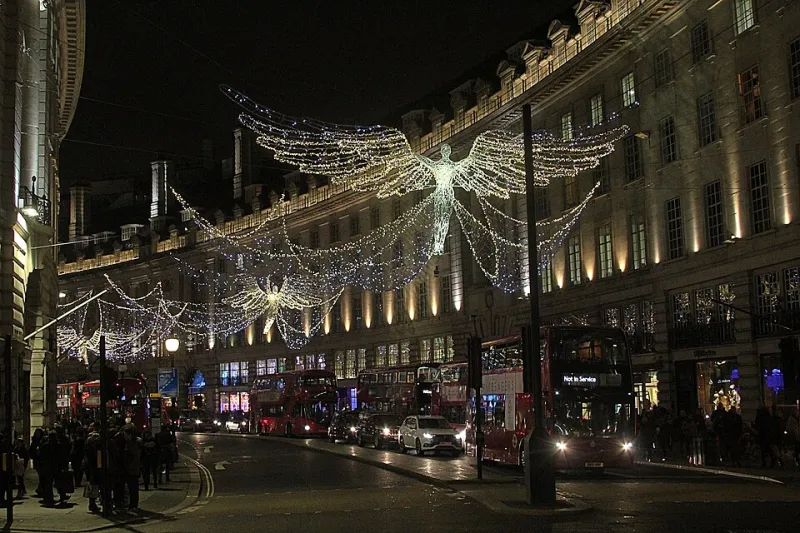
Photo: Oast House Archive , CC BY-SA 2.0, via Wikimedia Commons
On a damp Thursday evening in mid-November, the town square smells of chips, wet leaves and the diesel from a hired cherry picker. A man in a hi-vis jacket is arguing gently with a cable tie. Somewhere near the war memorial, a school choir is warming up with 'Jingle Bells' for the fourth time. This is the week before the big switch-on, and the magic is being assembled by people who mostly have day jobs.
Across the UK in 2026, most Christmas lights switch-ons are not run by a big events company. They are run by town councils, Business Improvement Districts, chambers of trade, Round Tables, Rotary clubs, parent-teacher associations and ad-hoc committees of people who said 'someone should do something' and then accidentally became that someone. The result is one of the most stubbornly cheerful traditions on the local calendar: a high street full of people, a countdown, a cheer, and a lot of lights that will hopefully stay on until January.
The magic is mostly admin
Behind the stage and the countdown is a paper trail longer than a string of fairy lights. There's public liability insurance, a risk assessment, a road closure order, traffic management, first aid cover, stewards, a music licence from PPL PRS, and a qualified electrician to check every set of lights before it goes up. The lights need the right IP rating for outdoor use, the cables need to be safe, and the generator needs to be fenced off. None of that makes the local news. All of it makes the night happen.
Fundraising starts early — sometimes in January, when the takings from the collection buckets are counted and the committee realises the big star needs replacing. Local businesses chip in. So do councils, charities, pubs, supermarkets and the occasional anonymous donor who clearly loves a bit of sparkle. A switch-on can cost anything from a few thousand pounds to a five-figure sum, depending on the size of the town and the ambition of the display. Every pound is usually chased, counted and thanked.
Choirs, charity stalls and the bloke with the ladder
On the night itself, the high street becomes a stage. A brass band plays, the local radio presenter makes a joke about the weather, the town crier rings a bell, and a child who won a colouring competition presses the button. Around the edges are the charity stalls: the hospice raffle, the Scouts' mince pie stand, the WI's handmade decorations, the food bank collection, the animal rescue with a dog in a Santa hat. There is mulled apple juice, a queue for the chip shop, and at least one toddler having a meltdown because Father Christmas is five minutes late.
Volunteers do the invisible work: marshals in tabards, bucket collectors, people handing out song sheets, someone holding a torch for the photographer, someone else running a lost-child point. There is always a bloke with a ladder, even when no ladder is needed. There is always a spare extension lead. There is always a moment when the microphone squeals and everyone laughs.
Why a switch-on is about more than lights
Footfall matters to high street shops, and a busy switch-on can give local traders a much-needed boost in the run-up to Christmas. But the real return is social. A switch-on gives people a reason to leave the house, bump into neighbours and remember that their town has a centre. It raises money for good causes. It recruits volunteers for the year ahead. It makes a place feel like a place rather than a postcode.
Tzeca loves a good local ritual, and this is one of the best. It is not polished. It is not expensive to attend. It is a bunch of people standing in the cold, singing slightly out of tune, watching a switch being flipped. That is the whole point.
How to find a 2026 switch-on near you
Start with your local council's events page, the town council website, the BID or chamber of trade, and the library noticeboard. Local Facebook groups and Instagram accounts often post the date before the official website does. Parish newsletters, community radio and the free paper still matter. Search for 'Christmas lights switch-on 2026' plus your town or village, and check the date — most run from mid-November onwards.
If you need step-free access, a quieter moment, a BSL interpreter or an accessible toilet, ask ahead. Good organisers will tell you what's available; great organisers will ask what you need. If you are travelling by bus or train, check the last service home before the countdown starts. And if the weather looks grim, check the organiser's social media — outdoor events can move or shift at short notice.
Five ways to help without joining a committee
- Spend a tenner locally. Buy a coffee, a mince pie, a raffle ticket. It all counts.
- Put something in the bucket. Even a pound helps pay for the lights, the insurance and the portable loo.
- Volunteer for an hour. Bucket collectors, marshals and tea-makers are always needed, and you usually get a great view.
- Offer a skill. Electricians, first aiders, photographers, social media whizzes and people with a van are gold dust.
- Make it welcoming. Suggest a quiet hour before the music starts, a covered viewing area, seating for people who cannot stand, large-print song sheets, a warm space nearby, free water and a clear route for wheelchairs and pushchairs.
If you're the one with the clipboard
Start in September, not November. Talk to the council early. Insure the event. Write the risk assessment. Book the electrician and the first aiders. Confirm music licensing. Plan for rain. Make accessibility part of the plan, not an afterthought. Thank everyone twice. And remember that you do not need a committee of twenty — six good people and a shared spreadsheet will do.
The big switch-on is not really about the lights. It's about the moment the crowd counts down together, the glint on a child's face, the charity bucket that gets a little heavier, and the knowledge that a bunch of ordinary people made it happen. If you can, help them make it happen in 2026. Bring a pound, bring a skill, bring a friend. The glow is a group effort.