The Laminated A4 Is Your Town's Best Gig Guide — A Field Guide to Reading the Noticeboard
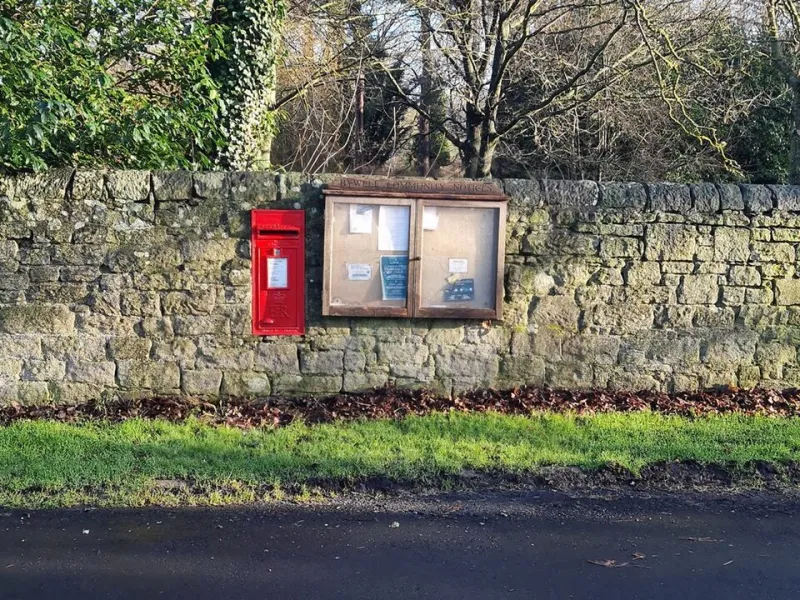
Photo: Oliver Dixon , CC BY-SA 2.0, via Wikimedia Commons
Your town has a cultural programme. It just isn't on a website. It's on a sheet of A4 in the chip shop window, slightly warped by steam, advertising a folk night above a pub you've walked past four hundred times.
Grassroots Britain runs on paper and sticky tape. The laminated notice, the photocopied flyer with the wonky margin, the hand-written index card in the Post Office — this is the actual listings section, and almost nobody reads it properly. So here's how.
First, learn the hierarchy of surfaces
Not all noticeboards are equal. Rank them by footfall, dwell time and how much the person pinning things up cares.
Tier one: the chip shop window. Peak audience, captive and hungry. Two minutes of standing there is two minutes in front of your poster. Anything here has already passed a local gatekeeper, usually the owner, which tells you something about the event's seriousness.
Tier two: the library foyer. The best-curated board in any town, because librarians are professionally organised and quietly ruthless about out-of-date paper. If something's still up in March, it's happening.
Tier three: the church porch. Underrated. Not just services — coffee mornings, bell-ringing taster sessions, a repair café in the side room, a choir that needs tenors and is not fussy.
Tier four: the lamppost with the cable ties. Wild, unregulated, occasionally illegible. Also where the genuinely odd stuff lives.
Tier five: the supermarket community board by the trolleys. Chaotic, but the volume is unmatched.
The poster tells you more than the event does
Read the design, not just the words. It's a code.
A poster with four different fonts and the phone number of a real human being? Small, friendly, probably excellent cake.
A single-colour photocopy with the date handwritten in biro? Someone's first go at running a night. Go. Be the audience. They'll remember you.
A glossy, professionally printed flyer with a QR code that leads to a ticketing platform? Either a touring act or a very organised committee. Check the venue before you commit.
A4 portrait, laminated, with last year's date still visible under the new one? Tradition. Likely a fixture. Likely the same twelve people every month, and they'll be glad of a thirteenth.
A rough glossary of noticeboard code
- 'Doors 7.30, music 8' — there will be a raffle. There is always a raffle.
- 'Free entry, donations welcome' — bring actual cash, not a vague intention.
- 'Bring your own' — usually drink, sometimes a chair, occasionally both.
- 'All welcome' — genuinely all welcome, and they will mean it more than any chain venue ever does.
- 'Refreshments available' — tea, squash, and a slice of something. This is a promise and it will be kept.
- 'Strictly no parking in the hall car park' — there are nine spaces and one of them belongs to the caretaker.
- 'See Facebook for details' — see the Facebook group, which will be a beautiful mess.
Nights out you'll only ever find this way
Noticeboards are where the events too small to advertise actually live. A few categories worth hunting for:
The monthly folk session. No stage, no tickets, a circle of chairs and a fiddle. Turn up, sit down, clap. Nobody will make you sing.
The repair café. Bring a broken lamp and a stranger with a soldering iron will fix it for free while you drink tea and feel briefly optimistic about the world.
The tabletop sale that's really a swap meet. Forty blokes and a box of vintage spanners. Oddly compelling, even if you don't own a spanner.
The seasonal supper. Harvest, Advent, a Burns night that's slightly off-script. Village hall, long tables, £8, bring your own bottle.
The walking group with no branding. Wednesday mornings, nine o'clock, lay-by. Five people and a dog. It is, by all accounts, the best thing in the county.
The quiz with the home-made questions. One round will be about the landlord's family. Roll with it.
The community Facebook group is a noticeboard too
Same energy, worse lighting. These groups are the digital equivalent of the lamppost — chaotic, occasionally combative, unexpectedly generous. Search the group rather than scrolling it: type the month and the word 'night', and you'll find things the algorithm has buried under lost-cat posts.
Two rules. Ignore anything with three exclamation marks and no address. And don't ask 'what's on this weekend' — it's been asked forty times. Search first, then ask.
Take a photo, go once, take a friend
The trick to reading your town's scruffiest calendar is simply to stop and read it. Photograph three posters a week on your normal route — the chip shop, the library, the porch — and by the end of a month you'll have a better social life than any app has ever managed to give you.
Then go once. The first visit is the whole game. Small nights survive on people who turned up on a whim, and the bloke on the door with the clipboard will be disproportionately pleased to see you.
And if you find something good, print it off and tape it to a lamppost. That's how it all keeps going round.