Glass Act: The Volunteers Turning Charity Shop Windows Into Must-See High Street Theatre
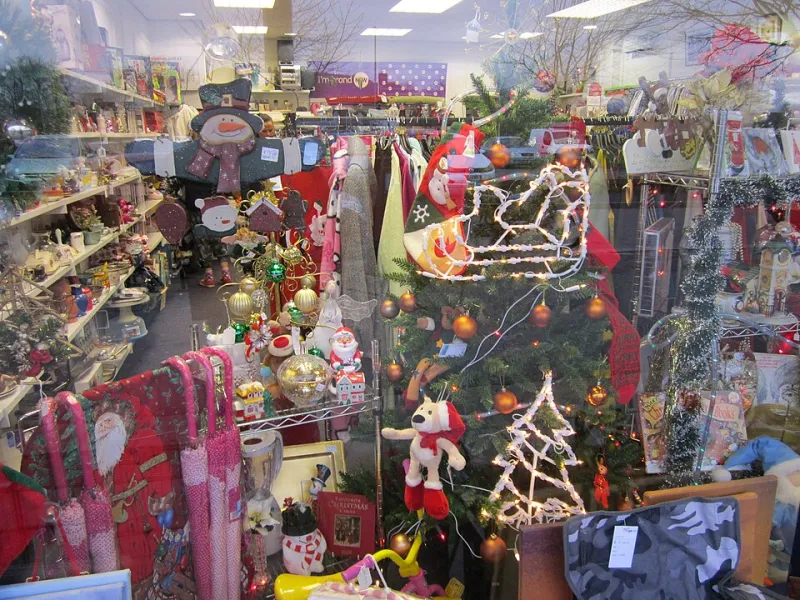
Photo: Rept0n1x, CC BY-SA 3.0, via Wikimedia Commons
There is a particular kind of magic to a charity shop window that has been taken seriously. Not just a rail of coats and a handwritten sign, but a proper scene: a stack of pre-loved books arranged like a fireplace, a mannequin in a wedding dress mid-vowel, a string of fairy lights doing more emotional work than a whole streaming series. Across the UK, a quiet rivalry is playing out between the volunteers who dress these windows — and the high street is all the better for it.
The shopfront as a stage
Charity shop windows have always been a bit of a lottery. Some are tidy but forgettable. Some look like a jumble sale in a hurry. Then there are the ones that stop you mid-step, the ones you photograph for no reason other than the fact that somebody clearly had a vision and a glue gun.
In one Midlands market town, the local charity shops have turned window dressing into a friendly contest that runs through the seasons. Volunteers meet over tea to swap themes. There are late-night crafting sessions in back rooms, with donated fabric, old wallpaper samples and a shared belief that a shopfront can be a little bit West End if you squint. One shop went full seaside for a summer week: deckchairs, buckets and spades, a hand-painted sign reading Gone Fishing. Another built a miniature Christmas market out of shoeboxes and cotton wool. Neither display cost much. Both raised more than the volunteers expected.
That is the thing about a brilliant window. It does not need a budget. It needs a point of view.
How the rivalry works
The rivalry is not bitter. It is the sort of competition that happens between people who genuinely want each other to do well, then quietly nip out for more ribbon. Volunteers swap spare mannequins. They lend each other artificial flowers. They send photos of a particularly good charity shop window three towns over with the caption: right, we need to raise our game.
Themes tend to emerge from what is already in the shop. A donation of vintage crockery becomes a 1950s kitchen. A pile of children's books becomes a reading nook. One shop built an entire window around a single donated ukulele and a sign that said Learn Something New. It moved the ukulele within a day and a beginner's class sign-up sheet within a week.
Late-night crafting sessions are where the real work happens. Volunteers cut out letters, paint backdrops on cardboard, and debate whether a prop is charming or just a bit odd. There is usually a biscuit tin. There is always somebody who says, we could just put a rail of dresses in and be done with it, and then stays until 9pm making a papier-mâché seagull.
Why a good window is worth more than a raffle table
A charity shop window is not just decoration. It is the shop's handshake with the street. It tells people what the shop is like before they come in: creative, welcoming, worth a browse. It also tells them what the cause is about. A window full of dog beds and leads for a animal charity says more than a poster ever could. A display of school shoes and backpacks for a children's charity makes the mission visible at a glance.
And yes, it raises money. Not always in a straight line, but in the way that footfall always does. A window that changes every fortnight gives people a reason to look again. A window that makes somebody smile gives them a reason to walk in. A window that makes them stop for a photo gives the shop a free advert on social media.
One volunteer told me that their window displays do more for the shop than any leaflet drop. People come in to ask about the theme. They bring donations. They volunteer. They buy the odd thing they did not know they needed. The window is the conversation starter, and the shop does the rest.
The free show on your high street
What I love most about the charity shop window wars is that they are free. No ticket, no booking fee, no overpriced ice cream. You can take the kids for a walk and let them spot the themes. You can take your nan. You can take a coffee and stand there for five minutes, which is a proper luxury in a world that keeps telling us to hurry up.
It is also a reminder that high streets are not just a list of shops. They are a stage. The people who dress those windows are putting on a show for anyone who happens to pass by, and they are doing it for a good cause. That feels worth celebrating.
How to nominate a local shop
If your local charity shop window has been doing excellent work, tell them. Seriously, tell them. Volunteers often hear about the mess and the missing hangers, not the fact that somebody loved their display.
- Pop in and say so. A note through the door works too.
- Tag the shop in a photo on social media, with permission.
- Mention it to the manager and ask if they have a window-dressing team you can thank.
- If you have craft skills, offer an hour. If you have props, offer those too.
- Nominate them for a local community award if one exists. If it does not, a handwritten card is a fine substitute.
A winning window checklist for 2026
If you are helping with a display this year, here is a simple checklist that works from a tiny shopfront to a big corner window:
- Pick one clear idea. A theme you can explain in a sentence.
- Use what you have. Donated props, cardboard, fabric and imagination beat a big spend.
- Make it readable from across the street. Big shapes, strong colours, less clutter.
- Show the cause. A small sign linking the display to the charity helps people understand why it matters.
- Change it regularly. Fortnightly is plenty; monthly is fine.
- Light it well. A window that glows after dark is a gift to the high street.
- Keep it safe and accessible. No trip hazards, no blocking the door, no fire risks.
- Thank the team. Window dressing is a team sport, and the best displays are the ones where everybody gets a say.
The charity shop window wars are not really about winning. They are about making the high street feel alive, one pane of glass at a time. And if a papier-mâché seagull happens to be involved, so much the better.